Skip to content
Europeans 2027 · 1–4 July

Technical rules

The rules of Kubb.

An English version of the official European Championships rules: the same rules that will apply at the European Championships 2027 in Valpolicella. If you're starting from scratch, begin with What is Kubb.

  • Based on EKC version 3.4 (19 October 2026)
  • Updated
  • Reading time: about 5 minutes
Official EKC rules (PDF, in English)
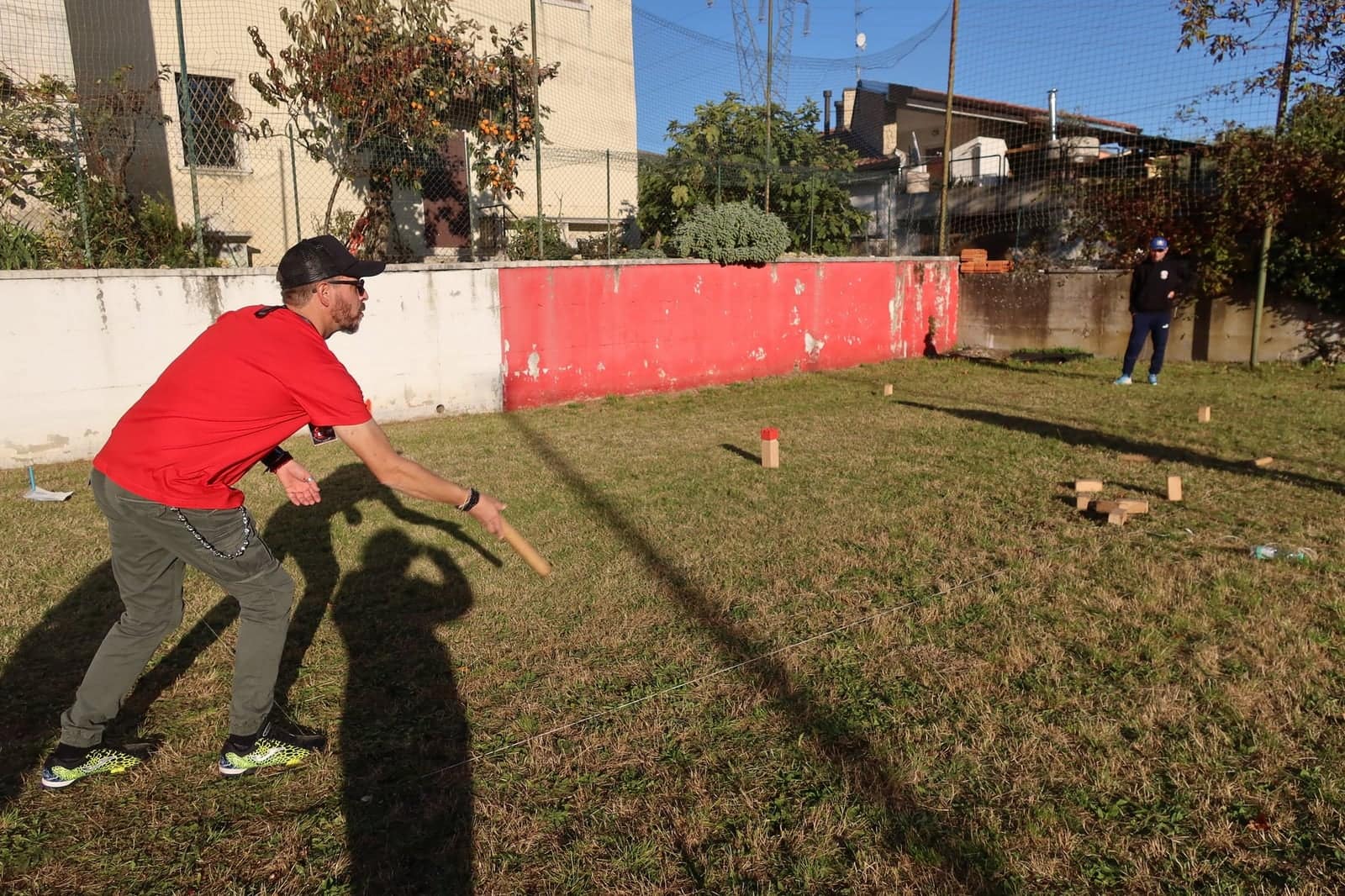
Player in a red shirt leaning forward as he throws a stick, his long shadow on the grass and the kubbs at the far end of the pitch
Torneo d’Autunno 2 vs 2 — Cavalo, 2025

Glossary

The language of Kubb.

In the text they have a dotted underline: hover over one or tap it to see the definition.

king
The tallest piece (9 × 9 × 30 cm), in the centre of the pitch. Knocked down last.
kubb
The wooden blocks (7 × 7 × 15 cm), five per team. In English the plural is “kubbs”.
throwing stick
The piece of wood you throw (Ø 4.4 × 30 cm): six per team each turn.
baseline
The short side of the pitch: you throw from behind this line, and the baseline kubbs stand on it.
baseline kubbs
The five kubbs lined up on the baseline at the start of the set.
field kubb
A kubb that was knocked down and thrown into the other team's half: it must be knocked down before the baseline kubbs.
throwing in (inkast)
Throwing the knocked-down kubbs into the other team's half, from your own baseline.
penalty kubb
A kubb that lands out twice when thrown in: the receiving team places it.
attack line
The line further forward that you throw from when a field kubb is left standing.
king toss
The throw, one per team, that decides who starts.
2-4-6 opening
The starting team throws 2 sticks, the other team 4, then 6 each until the end of the set.
set
One game within a match: it ends when the king falls. A match has one or more sets.
You're reading §1 The pitch and the pieces
1

The pitch and the pieces

In shortAn 8 × 5 m pitch, five kubbs per side on the baseline, the king in the centre.

A regulation pitch measures 5 m × 8 m, on closely mown grass. The corners are marked with four pegs and the centre line with two pegs halfway along the long sides.

On each baselineThe short side of the pitch: you throw from behind this line, and the baseline kubbs stand on it. you place 5 kubbs, inside the pitch and touching the line: the two at the ends one stick length from the corner pegs, the other three spaced out evenly. The king stands in the exact centre of the pitch.

Recommended sizes: kubbs 7 × 7 × 15 cm, king 9 × 9 × 30 cm, sticks 30 cm long with a diameter of 4.4 cm.
An 8 × 5 m pitch: four pegs at the corners and two halfway along the long sides; five kubbs per side touching the baseline, the king in the centre.
2

Teams and who starts

In short1 to 6 players per team; whoever wins the king toss starts, with the 2-4-6 opening.

The game is played by two teams of 1 to 6 players each. Tournaments usually have three formats: 1 against 1, 3 against 3 and 6 against 6.

Who starts is decided by the king tossThe throw, one per team, that decides who starts.: one player from each team throws a stick towards the king at the same moment, and the team whose stick stops closest wins (it's the tip of the stick that counts). Touching the king is allowed, but if you knock him over, the other team wins the king toss. The winners choose whether to start or which side to play from, and can also let the other team start.

King toss: one stick per team, at the same time. The team whose stick stops closest to the king starts (or chooses the side); the tip of the stick counts.

2-4-6 openingThe starting team throws 2 sticks, the other team 4, then 6 each until the end of the set.: the starting team throws 2 sticks, the other team replies with 4, then each team throws 6 per turn until the end of the set. For each new set the teams swap sides and the other team starts.

3

How to throw

In shortUnderarm, vertical spin, feet behind the line, no more than two sticks per player per turn.

✓ Spins vertically

Maximum tilt 30°

✗ Helicopter, horizontal

A correct throw: underarm, with the stick spinning vertically; a tilt of up to 30° is allowed. Helicopter throws, with the stick spinning horizontally, are not allowed.
  • Throws are always underarm.
  • The stick may spin vertically. Spinning it horizontally, like a helicopter, is not allowed (maximum tolerance 30°): every throw must be as straight as possible.
  • Your feet, and anything else you lean on, stay behind the throwing line and inside the extended sidelines until the sticks and kubbs have come to rest.
  • A player may throw their second stick straight after the first, but no more than 2 sticks per turn.
  • You may only throw once the other team has raised all the field kubbs and stepped off the pitch. An invalid throw is not repeated, and any kubbs it knocked down go back where they were.
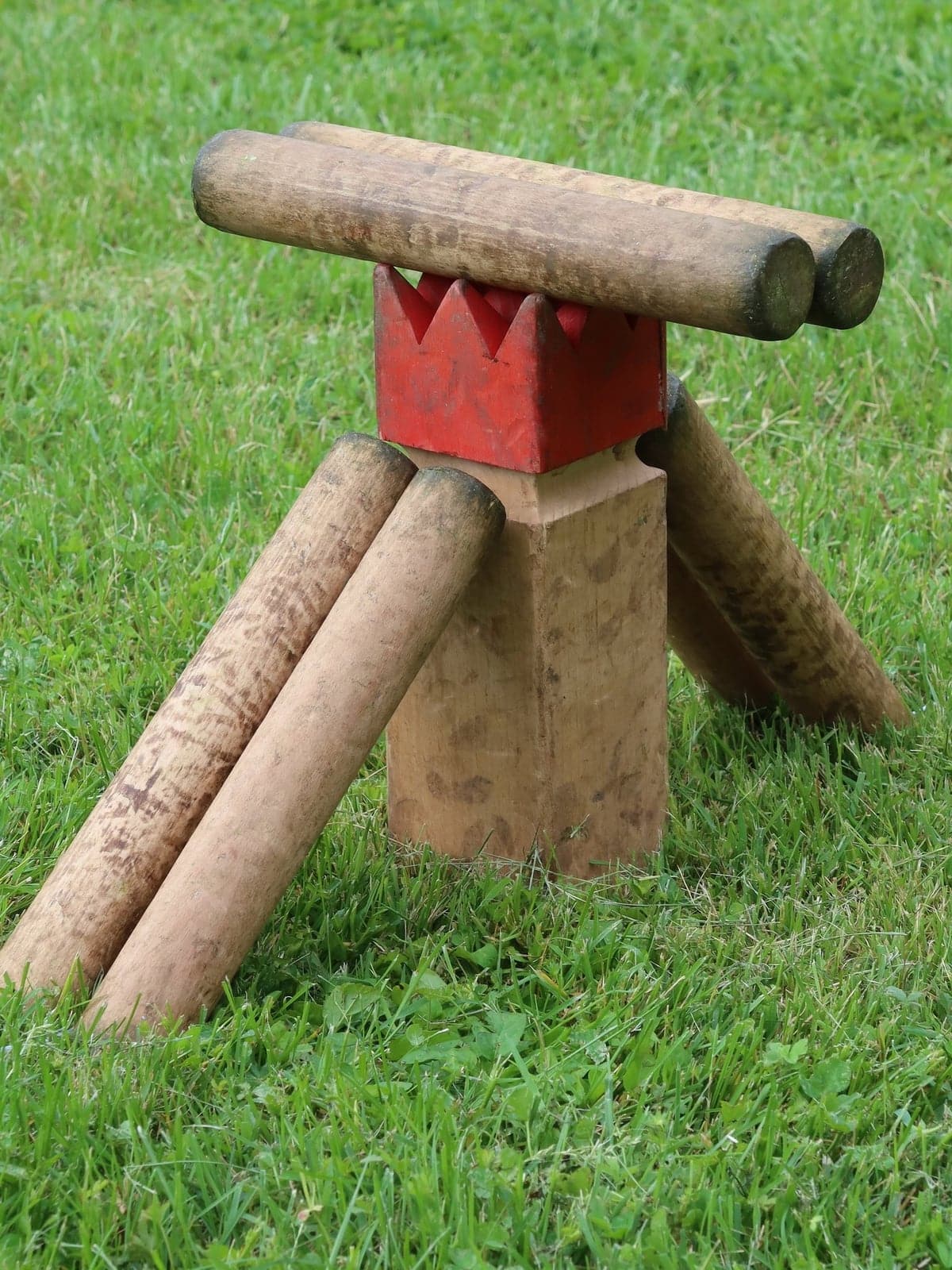
Close-up of the wooden king with its red crown, with the throwing sticks lying around it on the grass
Aribandus! — Parco di Fumane, 2025
4

Phases of a turn

In shortField kubbs first, then baseline kubbs, the king last of all.

Every turn is split into three phases, in a fixed order:

  1. Knock down the other team's field kubbA kubb that was knocked down and thrown into the other team's half: it must be knocked down before the baseline kubbs. (if there are any).
  2. Knock down the other team's baseline kubbsThe five kubbs lined up on the baseline at the start of the set..
  3. Hit the king (only once all the other team's kubbs are down, and if you still have sticks to throw).
  1. Phase 1

    Field kubbs

  2. Phase 2

    Baseline kubbs

  3. Phase 3

    King

The fixed order in every turn: field kubbs first, then baseline kubbs, and finally the king, who stays off-limits until all the other team's kubbs are down.

Watch out: a baseline kubb knocked down too early, while there are still field kubbs standing, is put back up straight away and can be hit again in the same turn. A kubb only counts as knocked down if it falls from a wood-on-wood hit (a stick or another kubb).

5

Throwing in the kubbs and the attack line

In shortKnocked-down kubbs are thrown into the other team's half; if a field kubb is left standing, the other team throws from closer in.

Once all the sticks have been thrown, the team whose kubbs were knocked down picks them up and throws them back into play, one at a time and from its own baseline, into the other team's half. A kubb is valid if it can be stood up entirely inside that half, without touching the lines.

All the kubbs are thrown first; any invalid ones get a second throw at the end. If they are still out, they become penalty kubbA kubb that lands out twice when thrown in: the receiving team places it.: the receiving team places them wherever it likes in its own half, at least one stick length from the king and from the baseline.

Kubbs thrown back into play become field kubbs: the receiving team stands them up exactly where they landed, choosing just once which end to raise them on, without lifting or turning them. They have to be knocked down first in the next turn.

If a team doesn't knock down all the field kubbs, in the next turn the other team may throw from an attack lineThe line further forward that you throw from when a field kubb is left standing. further forward, level with the standing field kubb closest to the centre line. Throwing in the kubbs, on the other hand, is always done from the baseline.

Attack line: if a field kubb is left standing, in the next turn the other team throws from a line further forward, level with that kubb.
6

Attacking the king

In shortThe king is hit last of all: if he falls too early, the set is lost.

The king can only be hit once all the kubbs in the other team's half (field and baseline kubbs) have been knocked down and there are still sticks left to throw in the turn. The first team to knock him down wins the set.

Whoever knocks the king down too early, even by accident, loses the set. If the king is knocked over by the pitch string or by a hand, he is simply stood back up.

King down too early = set lost.

The king may only be knocked down last. If he falls too early, even by accident, the set is lost.

Under the Swedish and US rules, throws at the king are always taken from the baseline. The European Championships rules only say that you throw forwards, with all the sticks you have left: if in doubt, ask the tournament organisers.

When in doubt, your opponent always gets the benefit of the doubt.
Fair play, §9
7

Winning and the tiebreak

In shortWhoever knocks down the king wins the set. No draws: there's a tiebreak.

The set is won by the first team to knock down the king within the rules; a match can have one or more sets. There are no draws: in timed tournaments, when time is up you play the tiebreak specified by the tournament.

At the European Championships the tiebreak works like this: a new king toss decides who has the advantage, and from then on one kubb is removed from the opponent's half every turn, starting with the one closest to the baseline, until someone knocks down the king.

8

European Championships rules

In shortAt the European Championships: 1v1, 3v3 and 6v6, always the 2-4-6 opening, normally no referees.

At the European Kubb Championships (EKC) these rules also apply:

  • There are three formats: 1 against 1, 3 against 3 (teams of 3 to 6 players) and 6 against 6, for national teams.
  • The 2-4-6 opening applies to every match.
  • In 3 against 3 the sticks are shared out each turn between at least 3 players, no more than 2 each, and throwing in the kubbs rotates from one player to the next.
  • As a rule there are no referees: players make the calls and own up to their own mistakes. If you can't agree, you call the organisers, who send a referee.
  • Players in semi-finals and finals may not drink alcohol on the pitch.
9

Fair play

In shortRespect, welcome, honesty: if in doubt, the point goes to your opponent.

Kubb is a community game before it is a competitive sport. At its events, A.S.D. Kubb Italia promotes:

  • Respect for opponents, volunteer referees and spectators.
  • A warm welcome for first-timers: Kubb grows thanks to people who teach, not people who steamroll beginners.
  • Honesty on close calls: when in doubt, your opponent always gets the benefit of the doubt.
  • Zero tolerance for verbal or physical aggression.

Sources: official European Championships rules, EKC v3.4 (PDF), Swedish KUBB-VM rule booklet (PDF), USA Kubb and Kubb World. Translated and adapted by A.S.D. Kubb Italia.

You learn the rules by playing.

At open days we bring the kit; for the game explained in two minutes, read our guide.

See you on the pitch.

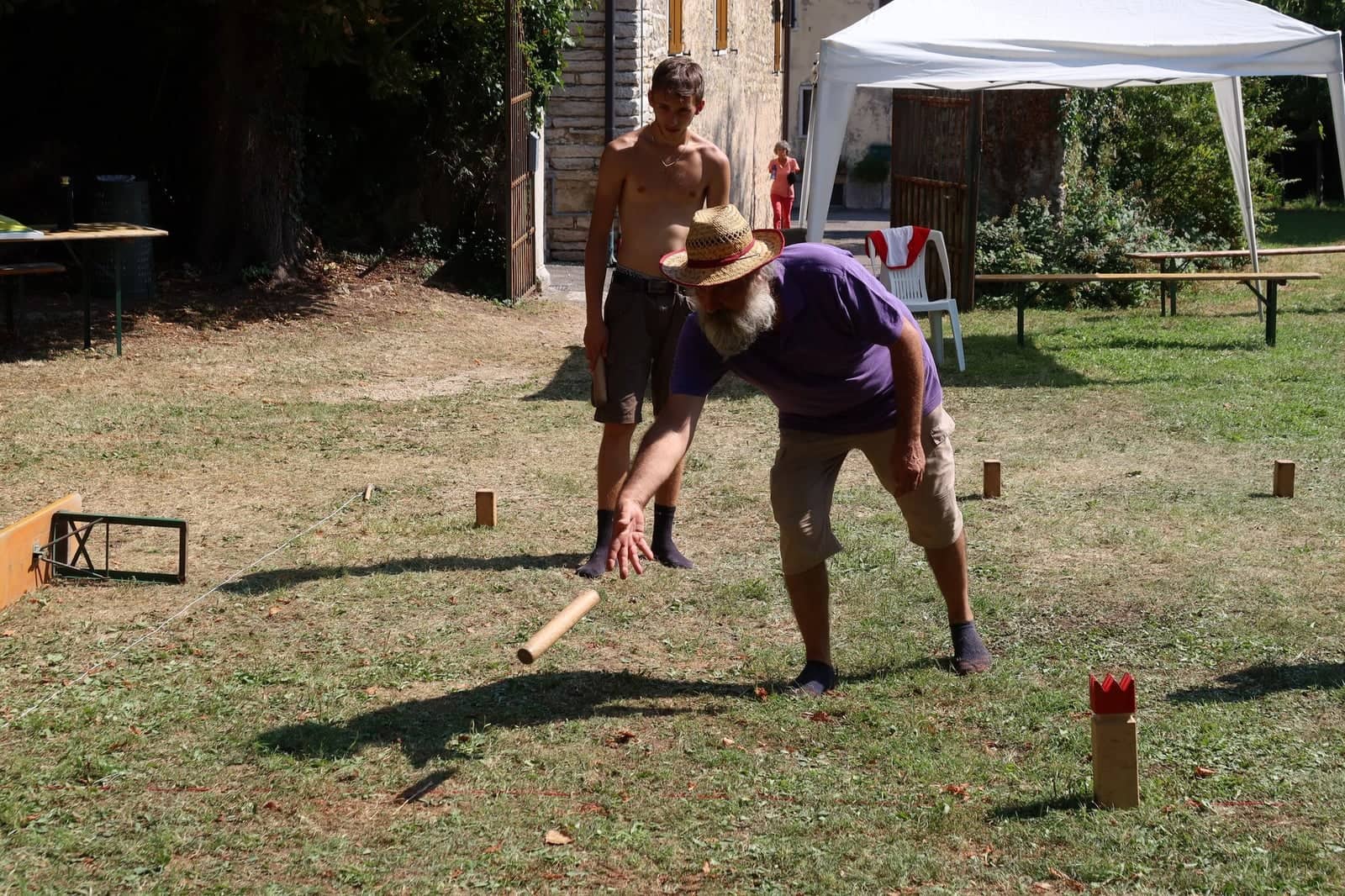
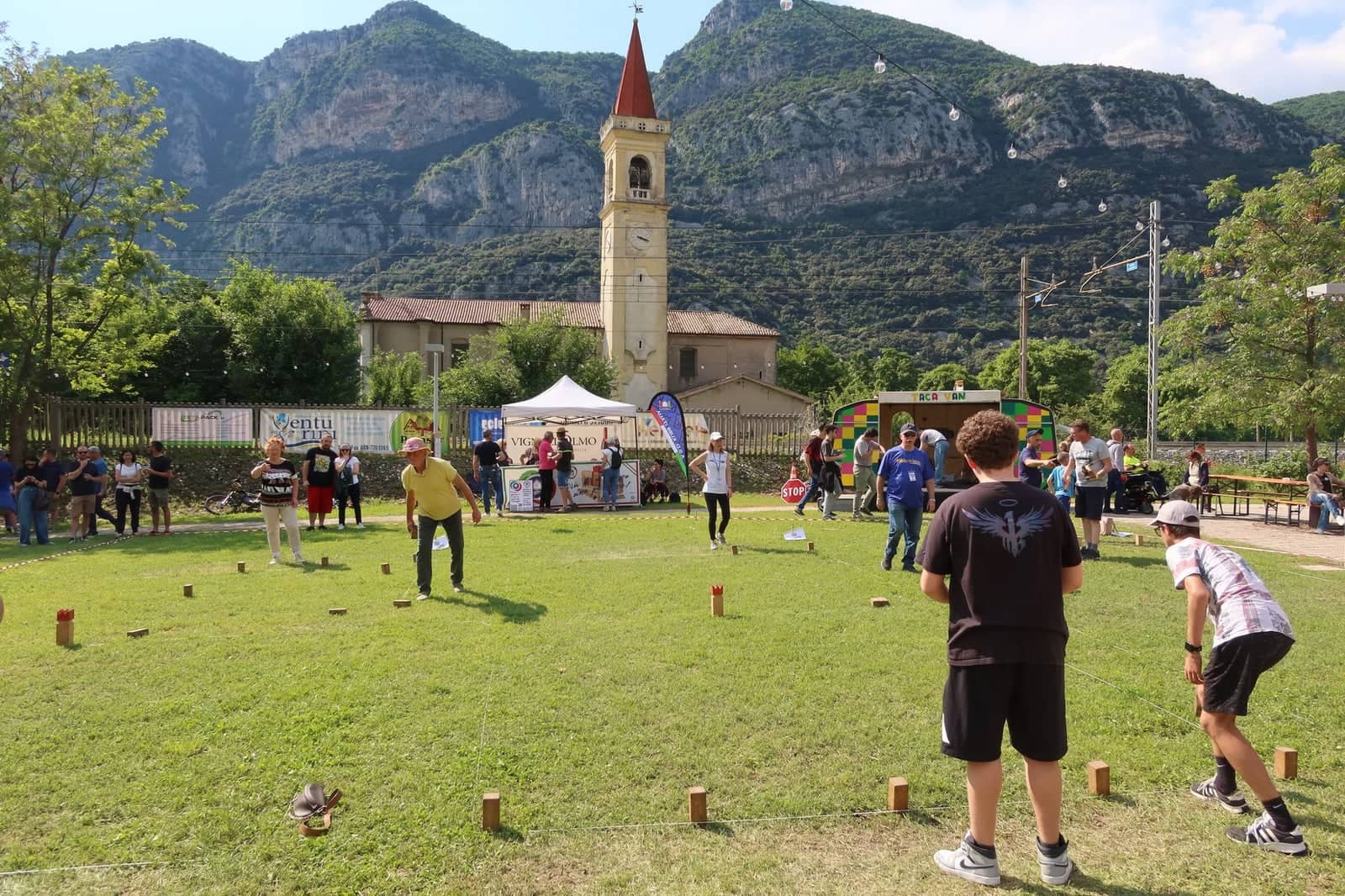
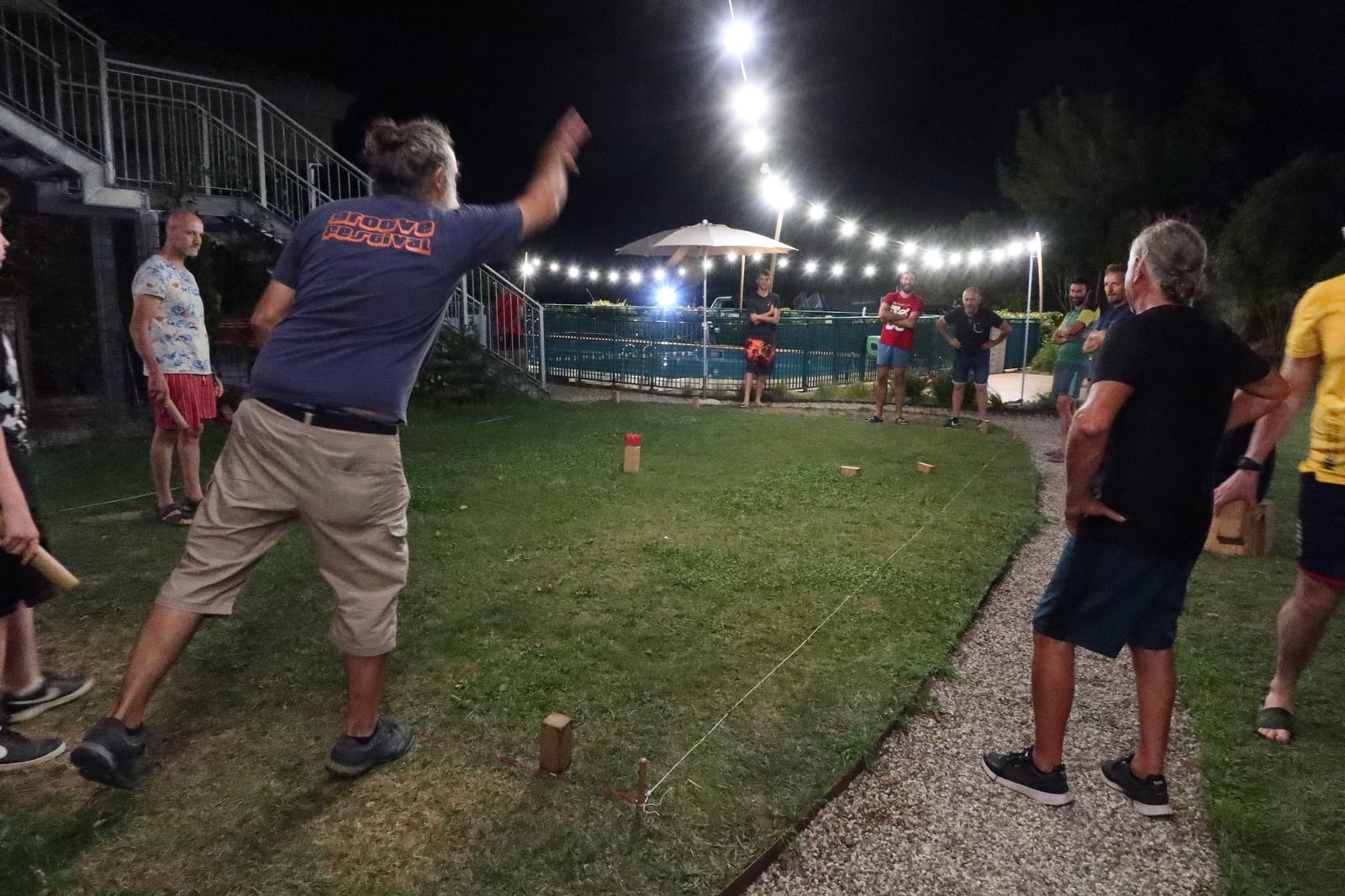
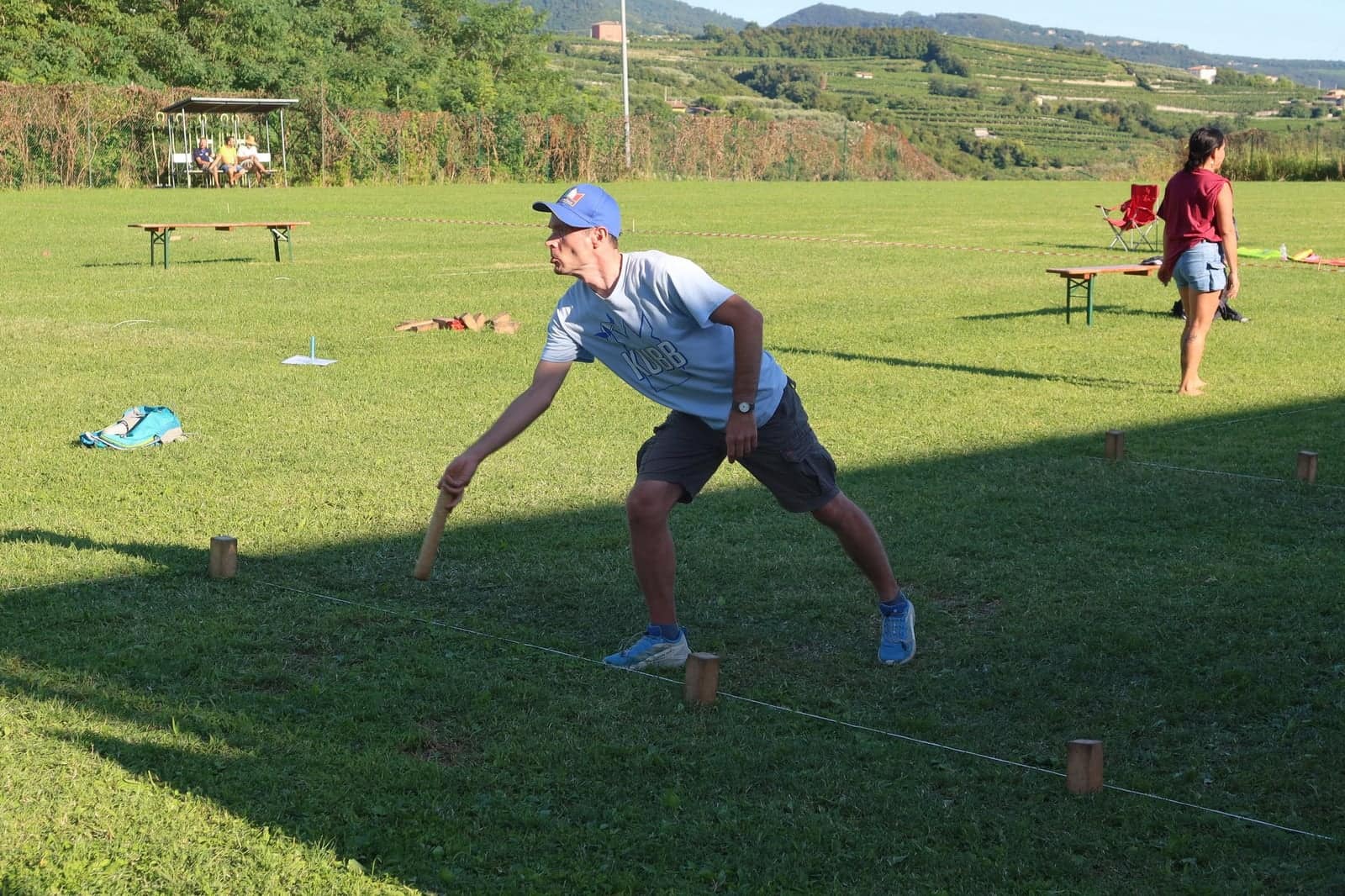
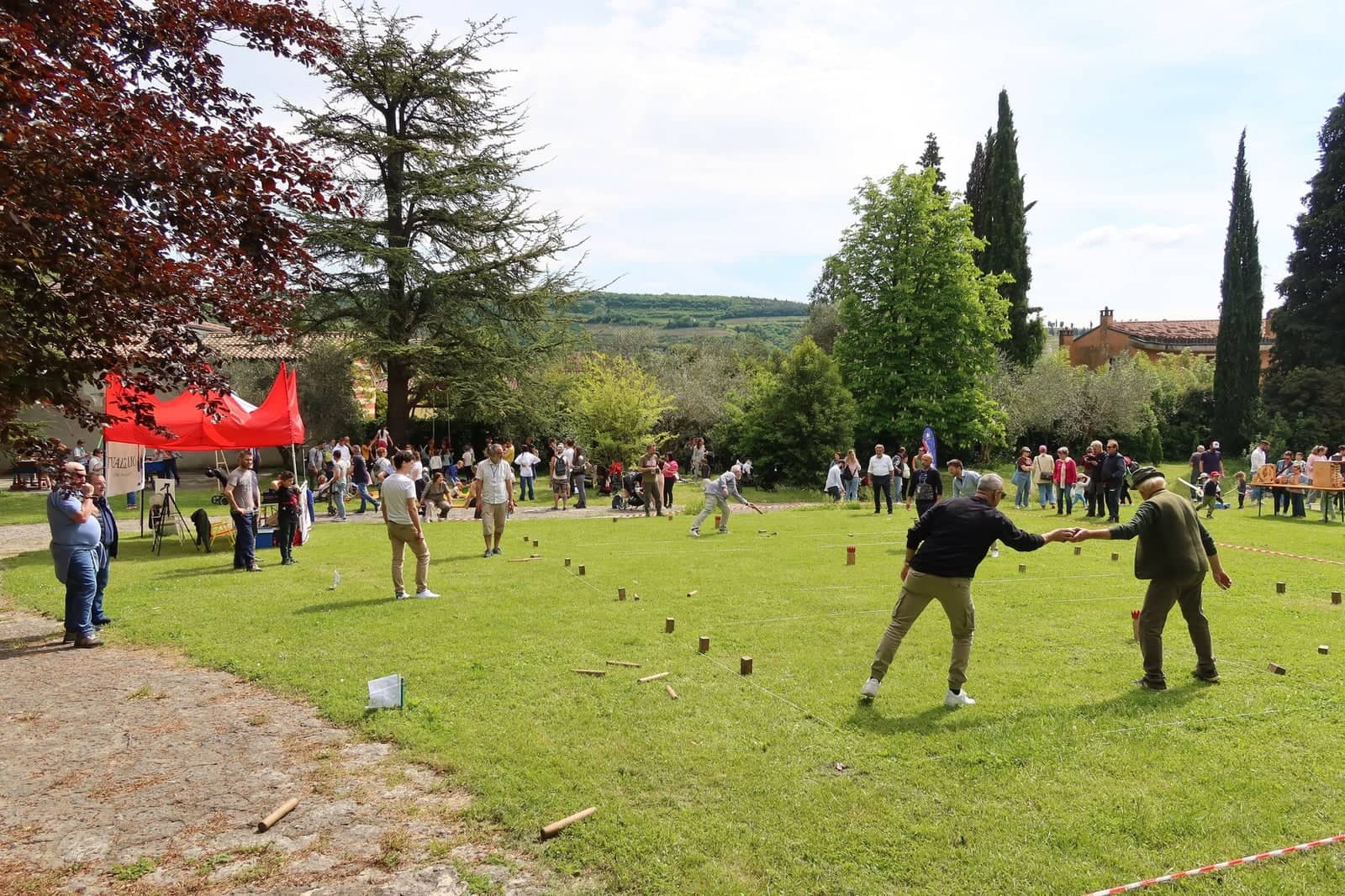
Large park lawn with cypresses and hills in the background: a Kubb pitch marked out with wooden kubbs, two players shaking hands in the middle and many people watching from the sides, with a red gazebo on the leftEvening prize-giving on a stage: three players show their plaques while a man speaks into the microphoneMan in a straw hat throws a stick low over the grass, the stick in flight towards the red kingKubb match on the grass with players on the throwing line, a bell tower and rocky mountains in the backgroundIn the evening, under the string lights, a player throws a stick along a pitch marked out on the grass while others watchA player in a light T-shirt leans forward and throws a stick low over the grassy pitch; in the background terraced vineyard hills under a blue sky.A player in a straw hat bends and throws a stick on the grass, while two teammates wait their turn; in the background a valley with vineyards and hills.Two men celebrate with raised fists under a blue gazebo, one wearing a horned Viking helmetA player in a straw hat throws a stick, seen in flight, while a boy with folded arms watches; behind, trees in full sun.Group photo of all the participants on the grass, standing and kneeling, in front of the gazebos and the Kubb Italia flagPrize-giving in front of the A.S.D. Kubb Italia board: seven people with certificates and boxes of wine in handA player in a black policewoman costume throws with one leg raised, next to a teammate dressed as a chef, in front of a low stone wall.